
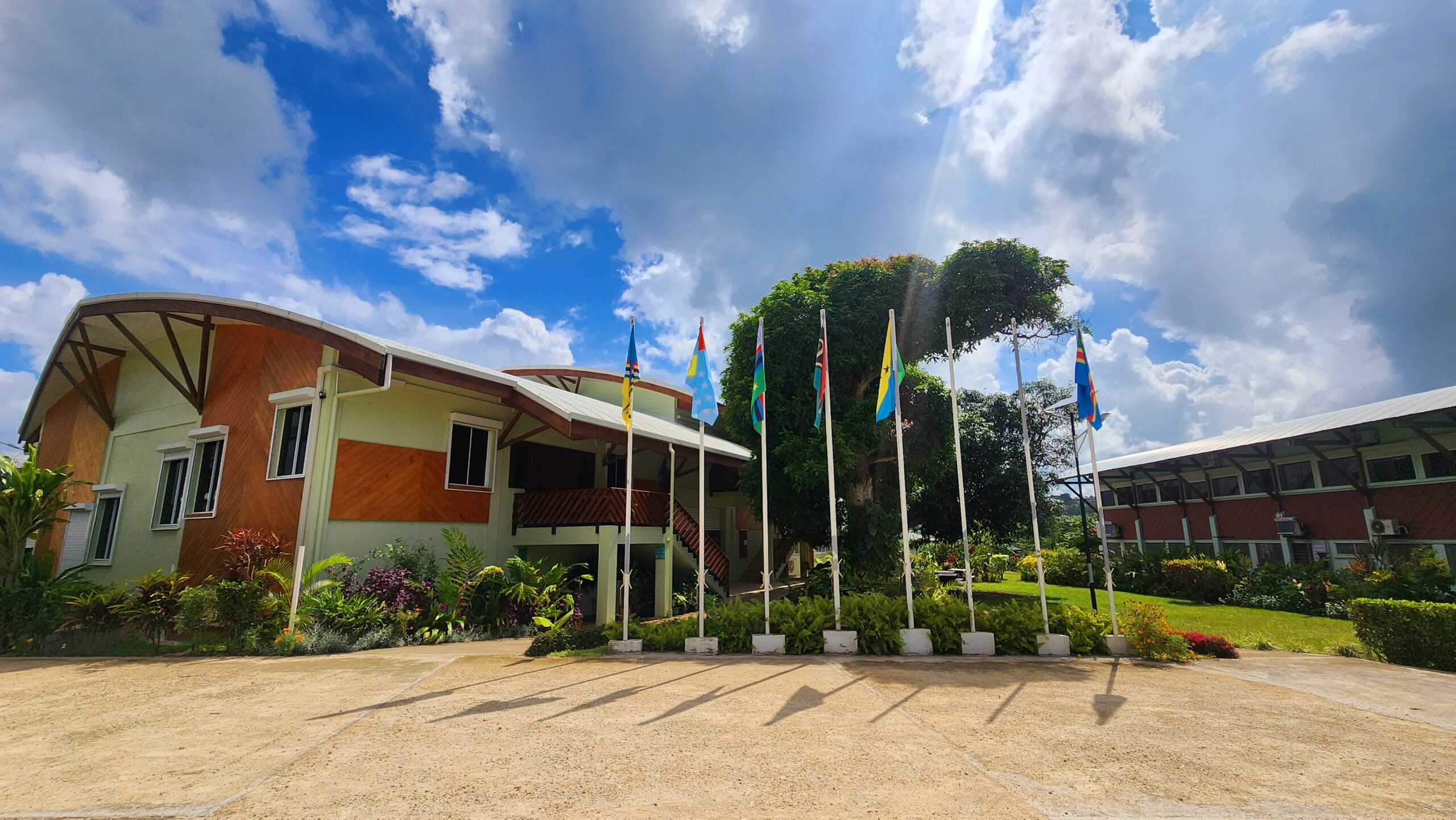
Port Vila, Vanuatu – Friday 10 April 2026: In a country where agriculture feeds communities, sustains livelihoods, and anchors the economy, the people teaching the next generation of farmers and agribusiness leaders carry an enormous responsibility. For Dr Ronick Shadrack, that responsibility is both professional and deeply personal.
As a lecturer with the National University of Vanuatu (NUV), based at the Vanuatu Agriculture College in Santo, Dr Shadrack is helping shape the future of agricultural education in Vanuatu.
A passion for building local expertise
Dr Shadrack’s career bridges academia and practical agricultural development. With experience in teaching and applied agricultural research, his work has long focused on strengthening technical and higher education, particularly in agriculture and rural development.
His decision to join NUV was guided by a powerful belief: Vanuatu should develop its own skilled professionals rather than relying heavily on overseas training.
“Agriculture is the backbone of Vanuatu’s economy,” he says. “Joining the National University of Vanuatu was an opportunity to contribute to national development by helping build a new generation of skilled agricultural professionals.”
That mission reflects the broader values of NUV – building national capacity, strengthening local knowledge, and empowering communities through education.
Teaching that connects to real life
At the Vanuatu Agriculture College, Dr Shadrack works to ensure that training is both academically strong and grounded in real-world needs.
The College currently offers Certificate programs in Agriculture covering crop production, livestock management, soil science, sustainable farming, farm management, and agribusiness fundamentals. These courses are designed not only for future farmers but also for students interested in agricultural entrepreneurship and value chains.
Students learn far beyond the classroom. Through demonstration farms, fieldwork, and supervised agricultural activities, they gain hands-on skills in crop establishment, livestock husbandry, irrigation systems, farm planning, and machinery handling.
“We emphasise competency-based training and experiential learning,” Dr Shadrack explains. “Our graduates should leave not just with knowledge, but with the confidence and technical ability to apply it immediately.”
For aspiring farmers, this means practical skills to improve productivity and sustainability. For future agribusiness leaders, the programs integrate entrepreneurship, financial literacy, marketing, and value addition – key tools for building profitable agricultural enterprises.
Research that serves communities
Dr Shadrack also champions applied research that tackles the real challenges facing Vanuatu’s farmers.
From climate change adaptation to soil fertility, food security, and sustainable livestock production, research initiatives are closely aligned with national priorities. Even within teaching-focused programs, students are encouraged to explore solutions that can directly benefit rural communities.
This approach reflects NUV’s wider mission: education that not only grants qualifications but also delivers practical solutions for the country’s development.
Expanding opportunities for students
The integration of the Vanuatu Agriculture College into NUV has opened new doors for students.
Under the university structure, certificate and diploma programs are being aligned with clear progression pathways into bachelor-level qualifications. Short courses and micro-credentials are also being developed in areas such as climate-smart agriculture, agribusiness development, and sustainable farming systems.
This flexible system allows both full-time students and working professionals to continue building their skills.
For the agricultural sector, the impact is significant: more locally trained professionals, stronger research capacity, and improved support for innovation across the country.
A vision for a resilient agricultural future
Looking ahead, Dr Shadrack hopes to see Vanuatu develop a modern and climate-resilient agricultural education system – one that integrates teaching, research, and community engagement.
His ultimate goal is simple but powerful: graduates who return to their communities not only with qualifications, but with leadership, entrepreneurial thinking, and a commitment to serve.
Through the integration of the Vanuatu Agriculture College in NUV, he believes the country can build stronger farms, stronger agribusinesses, and stronger food security for generations to come.